

A Life's Story
July 04, 2026
Man of conviction
Sid Green was a fearless lawyer and pioneering politician
By: Melissa Martin
He was, at times, a larger-than-life figure. A lawyer whose vociferous style made him the bane of many an opposing counsel. A political trailblazer who served 15 years as MLA for Inkster and who, in 1968, became the first Jewish Canadian to make a serious run for leader of a political party, when he sought to helm the provincial NDP.
When it comes to the legacy of Sidney (Sid) Green, this much is certain: whether they were on his side or facing off against him, nobody who saw Green at work in the courtroom or the halls of the legislature, doubted his honesty, his brilliant intelligence, or the courage he held to speak his convictions.
Green died on June 7, at 96 years old.
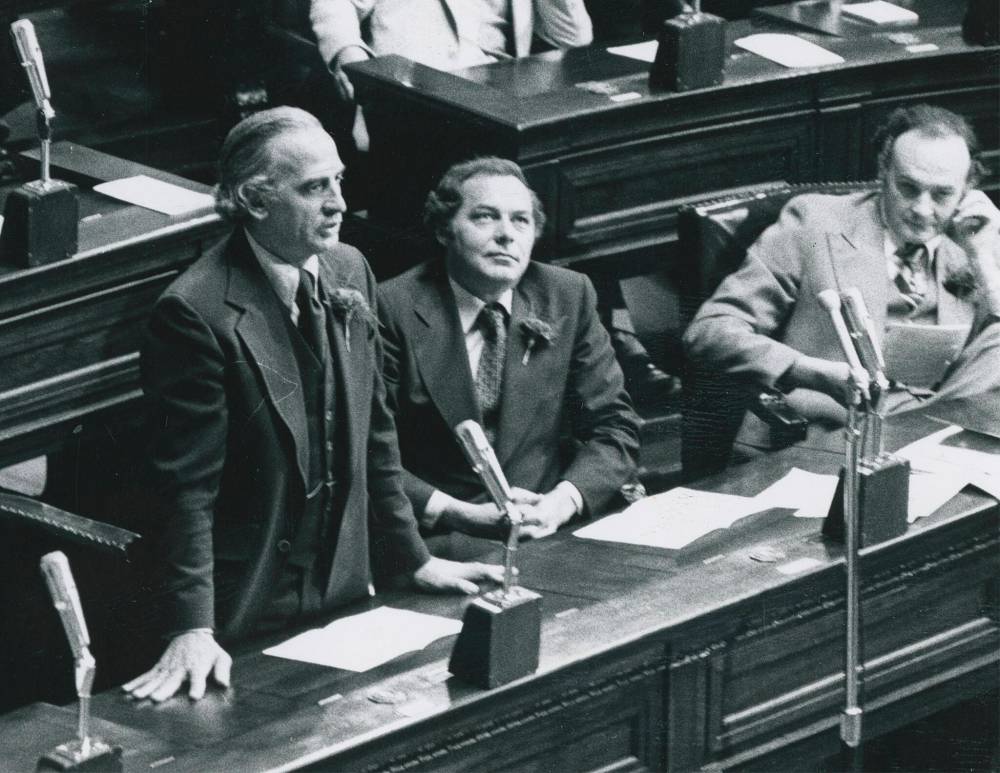
FREE PRESS FILES
In 1980, Sid Green — seen here with then-premier Ed Schreyer and Howard Pawley — was an MLA for Inkster.
“He demonstrated that lawyers have to be willing to stand up and say unpopular things, if that’s what their cause requires,” says Grant Mitchell, whose father, Leon Mitchell, joined forces with Green in 1955 under the partnership Mitchell & Green.
“We teach (law) students to be respectful, and courteous,” continued Mitchell, who retired in 2016 after his own four-decade legal career, including teaching law at the University of Manitoba. “Sid wasn’t those things. It wasn’t to the point of contempt of court, but it was aggressive and it was unrelenting and unapologetic.
“We need to be reminded sometimes that as uncomfortable as it might feel, sometimes you have to express unpopular ideas. Sid demonstrated that… you should say the right thing, not the popular thing.”
As far as anyone can tell, Green came by that pugnacious flair naturally. He was born in 1929 to a large working-class family in the North End; as a teen, he helped his father deliver coal. By the time he graduated from Isaac Newton school, he was set on pursuing a legal career, in part because he was so talented at crafting and defending an argument.
Yet he did not like to argue for the sake of it, his son Marty Green says. For him, it had to be rooted in conviction.
“He was electrifying when he would be arguing something, but he never joined the debating society,” Marty says. “He had no stomach for being given a topic and saying ‘argue this topic.’ He wouldn’t argue a topic he didn’t believe in, even as a lawyer.”
At the University of Manitoba, Green flourished. He was active in Jewish youth sports and community life; in 1954, he played a key role in founding BB Camp at Lake of the Woods. He also played quarterback for the law school’s football team, where he earned the nickname Slingin’ Sid, and led the squad to two school championships.
Above all, it was while in university that he met his wife, Shleema. The couple wed in 1954; together, they raised five children and were married 54 years until her death in 2009.
In 1955, he earned his law degree from the University of Manitoba, graduating as the co-recipient of that year’s law school gold medal. Shortly after being called to the bar, Green walked into Leon Mitchell’s office. Mitchell had graduated one year earlier and had started his own practice, though he faced physical limitations after a bout with Guillain-Barre syndrome.
Green was blunt: “You need me,” he told Mitchell, explaining he could take on the more physical aspects of legal work.
Together, Mitchell and Green proved unstoppable. Their firm soon became Manitoba’s pre-eminent labour law practice; some of the cases they took on would secure Canadian labour rights to this day.
In the early 1960s, inspired in part by Tommy Douglas, Sid joined the nascent NDP and began thinking of a political career of his own. He ran for Parliament in 1962, as what son Marty describes as a “sacrificial lamb” for the NDP in what was then seen as an unwinnable seat in Winnipeg South. He outperformed expectations, but finished third.
After that, Green turned his attention to Winnipeg’s metro council. He won two terms as councillor for the North End, then resigned to make another failed federal run in 1965. One year later, the stars on his political aspirations aligned, when he soared to victory as the NDP candidate for the provincial Inkster riding.
Green’s arrival in provincial politics would make him both an asset for the NDP and, sometimes, a thorn in its side. In 1968, he launched a bid to challenge Russell Paulley for provincial NDP leadership; this triggered drama within the party, which ultimately recruited then-MP Ed Schreyer to take over the reins.
(Green detailed his view of that brouhaha in his 2003 memoir, Rise and Fall of a Political Animal.)
After Schreyer led the NDP to a historic win in 1969, Green became one of the new government’s most public figures. That year, Schreyer appointed his one-time leadership rival Green to cabinet, where he would remain for most of the next 10 years, holding a number of portfolios.
Even as minister, Green was never one to dutifully follow the party line. In early 1972, he resigned his urban affairs portfolio after splitting with Schreyer over the issue of public funding to private religious schools. Green was vehemently opposed to one cent of tax dollars going to private institutions.
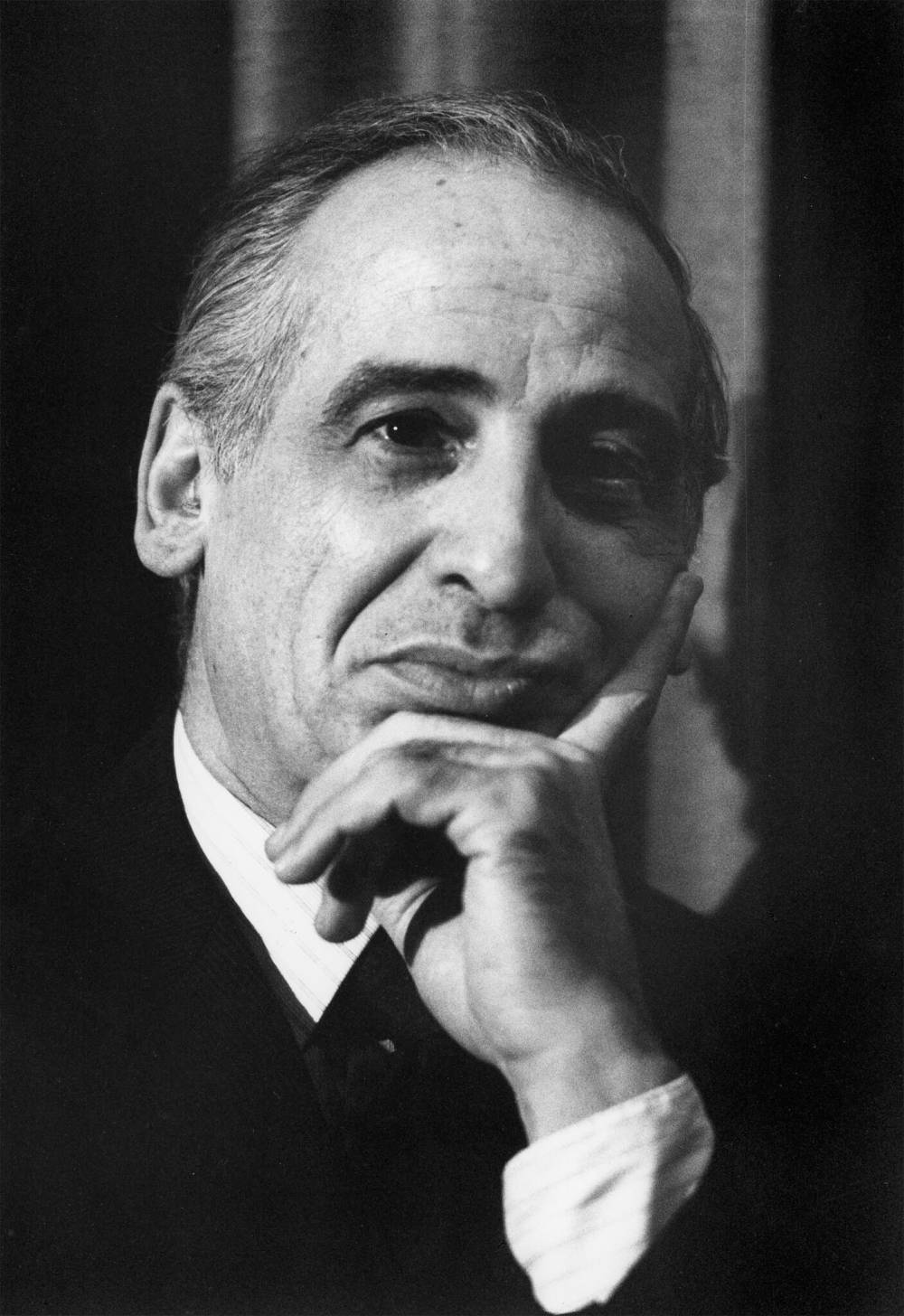
JAMES HAGGARTY / FREE PRESS FILES
Lawyer and political trailblazer Sid Green, seen here in 1981, died last month at the age of 96.
The rift didn’t last long, and Green returned to cabinet that summer. But that episode, his son Arthur Green says, illustrates something key about his father’s character. On occasion, some have used the word “contrarian” to describe Sid Green; but it was never the case that he took a position just because it was oppositional.
“He was utterly unafraid and unwilling even for a moment to consider sacrificing his own conscience when he thought that he was right and the other side was wrong,” Arthur says. “So in that sense, he was a contrarian, meaning willing to stand up for his own conscience and ideas, no matter what the cost.”
By then, most Manitobans knew Green’s fearless public presence. What they didn’t always see was the grounded family life he and Shleema cultivated at home. In contrast to her husband, Shleema was deeply private; she was also highly intelligent and patient, Sid’s partner in life in politics as well as parenting.
“I think he had her on a pedestal,” Arthur says. “She was also one of his heroes.”
So as Green pursued his political career, he and Shleema filled their home with warm family memories. In 1969, they moved in to a big house on West Gate with an expansive library, including tomes dedicated to Green’s hero, Abraham Lincoln. Soon, the house became “sort of an open-door salon,” Arthur recalls, as Green’s friends and associates swung by just to talk.
“There would be constant political discussion and social discussion, and math and science and literature,” his son says. “It was a very exciting atmosphere.”
The family also had a cottage in the Whiteshell which Green had received from a client in lieu of payment. The family would pass many happy summer days there, playing in the water and grilling on an outdoor stove. At night, after the kids had gone to bed, Green would stay up late into the night, listening to Joan Baez and Bob Dylan records.
By the late 1970s, Green’s political views had changed. Once a ferocious lawyer for unions, he’d come to be sharply critical of some protections unions were seeking, as well as other emerging social positions. This put him increasingly at odds with the provincial NDP; in 1979 he resigned from the party and sat as an independent.
In 1981, he co-founded the Progressive Party of Manitoba. When he ran for re-election in Inkster under that banner, he was defeated. Although Green would make several more political runs over the next decade, none was successful.

Instead, he returned to private law practice, where he once again became a feared courtroom figure. He never lost his zest for the law; when Green was well into his 80s, Mitchell says, it was still a common sight to see him in the library on the top floor of the Law Courts Building, poring over volumes of case law.
It helped that, in Green’s later years, he stayed physically and socially active. He’d taken up hockey in middle age, and even golfed into his 90s. He also found love again with longtime companion Dwila Burns, and enjoyed watching his family grow to include 15 grandchildren and nine great-grandchildren.
In the end, the impression he left was of what a person can accomplish, with total dedication.
“Any time he talked about a case, he would always be visibly excited no matter what case he was talking about,” Arthur recalls. “He was always all in, whatever it was.”
melissa.martin@freepress.mb.ca
A Life's Story
July 18, 2026
Fiercely francophone
Advocate celebrated the French connection in Manitoba
View More

A Life's Story
June 20, 2026
Thankful for the joy
Maartje Slyker left legacy of being a lifelong learner
View MoreA Life's Story
May 30, 2026
Woman of strength
Even residential school couldn’t erase who she was
View MoreA Life's Story
May 23, 2026
Ahead of her time
Family matriarch Hester Kroft was fiercely loving and incredibly sharp
View More

