

A Life's Story
April 11, 2026
A fond farewell to Dr. Tree
Urban forester Mike Allen put down deep roots in Winnipeg
By: Chris Kitching
When Winnipeg residents admire lush tree canopies or thriving forests in city neighbourhoods, they can thank dedicated advocates like Mike Allen, one of Canada’s earliest professional urban foresters.
Allen became known as “Dr. Tree” while protecting varieties of all types, and sharing his vast knowledge with generations of foresters — and even strangers in their yards — during a career that spanned more than 50 years.
“Truly a man of the trees. There was no doubt about it,” his wife, Susan Allen, told the Free Press. “On occasion, we’d be driving and he’d see a hazard tree, one that could go into a house, and he would stop and drop a note in their mailbox, just to say, ‘This is hazardous, you should have it looked at.’ He was always looking at the trees.”

Supplied
Mike Allen from his days as a University of Toronto student. He graduated with a forestry degree in 1970 and later obtained a master’s degree.
There were few things Allen didn’t know about trees, especially those on the Prairies. As the City of Winnipeg’s urban forester from 1988 to 2001, he helped lead its response to Dutch elm disease to protect North America’s largest urban elm forest.
The author and mentor notably said “no” when Hollywood producers for the Brad Pitt-led film Legends of the Fall wanted to uproot dozens of healthy trees in the Exchange District to accommodate a movie shoot in 1993.
Above all of his accomplishments and interests, Allen’s family said he is remembered as a family man who was there for the people he loved and those who loved him.
“He was my soul mate. My best friend. We were both each other’s soul mates and No. 1 fans,” said Susan Allen, his partner of 52 years.
Allen, 79, died in Kelowna, B.C., on June 8, 2025, after a long battle with Parkinson’s disease, his family said. He is survived by Susan, son James, daughter-in-law Sarah and grandson Felix.
Michael (Mike) Stanley Allen was born in Harrow, England, on April 25, 1946. His family settled in Toronto after moving to Canada when he was eight.
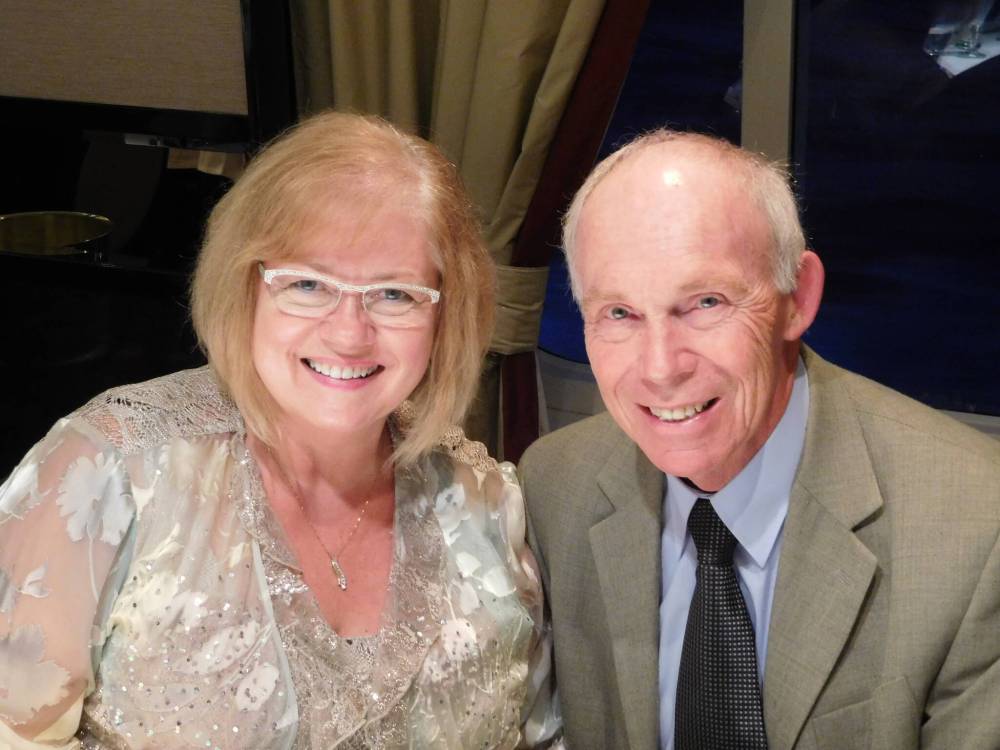
Supplied
Mike and Susan Allen
Allen’s passion for trees can likely be traced to childhood camping trips in forested areas such as Ontario’s Algonquin Provincial Park, his wife said.
He initially enrolled in astronomy at the University of Toronto, but later graduated with a forestry degree in 1970 — the year after Allen and his future wife, then a sociology student, met at a dance.
The romance blossomed, you could say. The pair were pen pals while Allen spent two years volunteering in Nigeria, where he educated people about sustainable tree practices and supported reforestation efforts.
The couple married in 1973. Allen went on to obtain a master’s degree from the U of T, leading to jobs in Kitchener, Ont., and Edmonton, before John Hreno, the City of Winnipeg’s first urban forester, recruited him to the position in 1988.
Allen built an urban forestry program “that is known as one of the best in Canada for its successes in maintaining canopy cover in a city that was a natural prairie,” former Tree Canada president Mike Rosen wrote in an in-memoriam piece on the U of T’s website.
Allen helped to develop Winnipeg’s Dutch elm disease management program, rallying Winnipeggers to protect their elms, and consoling them when diseased trees were removed from yards or boulevards.
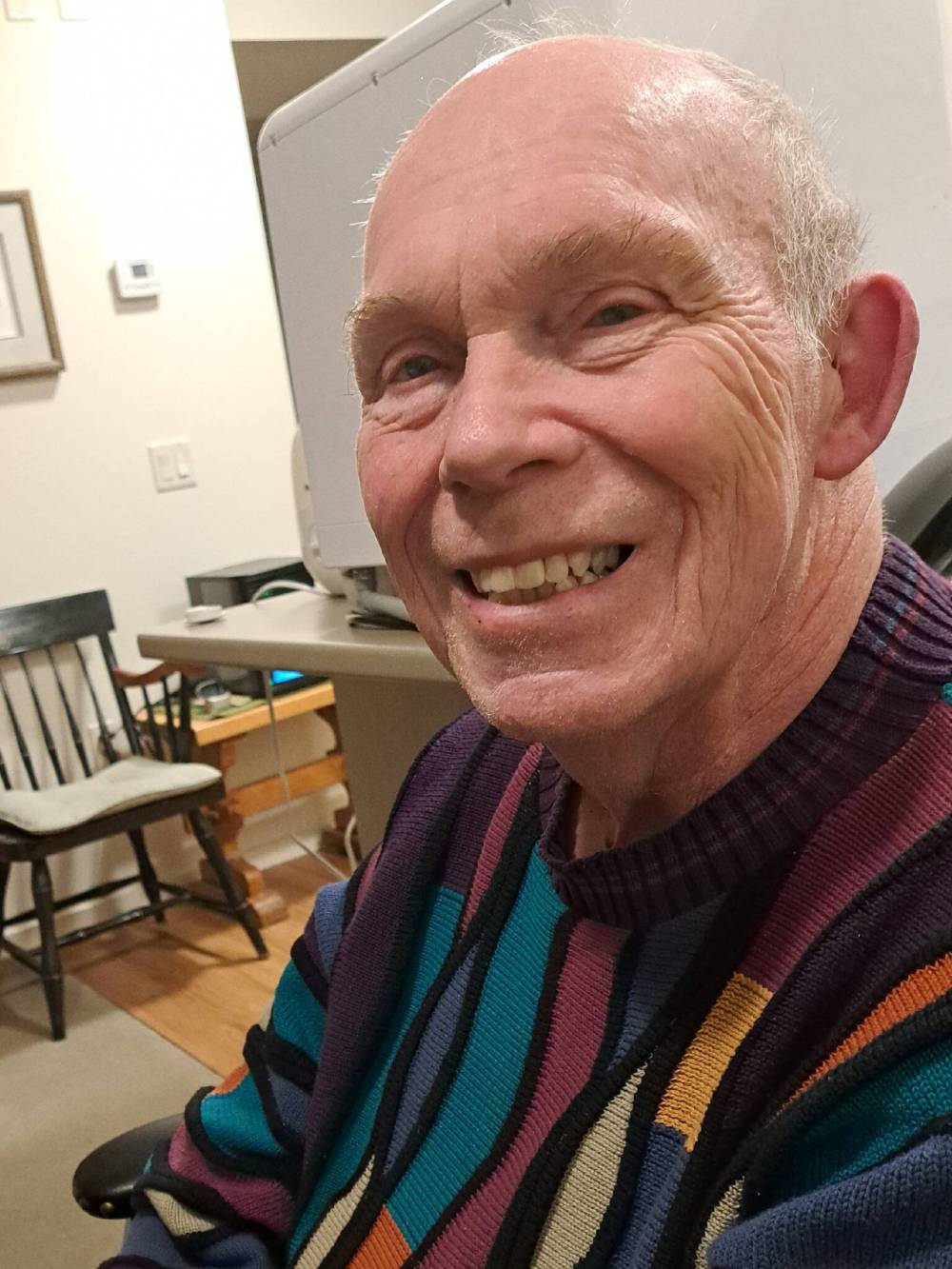
Supplied
Mike Allen
“I’ve had people crying over the phone,” he told the Free Press in August 1989. “They say, ‘Somebody put a red mark on my tree. I’ve known that tree for 40 years.’
“It’s a personal relationship they have with that tree, and when it’s gone it’s almost like a death in the family.”
The losses affected Allen as well.
“He felt pretty much every tree that had to be cut and every tree that was diseased. He felt it in his soul,” Susan Allen said.
Allen built ongoing relationships between the city and community groups, including the Coalition to Save the Elms, now known as Trees Winnipeg, during that period.
His family said he is fondly remembered for his quiet strength, kindness and willingness to help people.

Supplied
James, Susan and Mike Allen
Friend Richard Westwood was head of the province’s forestry branch when he met Allen. The pair served together on Trees Winnipeg’s board of directors.
Westwood said Allen was known Canada-wide for his knowledge and dedication to protecting trees and enhancing forests.
“I always found him to be very thoughtful. He was always very interested in tackling problems, be it a single tree, a group of trees or policies the city should be looking into,” said Westwood, a University of Winnipeg professor and director of its Centre for Forest Interdisciplinary Research.
“He really wanted to see Winnipeg as treed and as beautiful a place as he could make it.”
Allen once paid out of pocket to have elm trees in a park near his home treated with a biological vaccine.
“He was a big promoter of trees and the use of trees in urban spaces, and providing some of the forest feel to urban landscapes that are often devoid of trees and birds,” Westwood said. “I would say I learned a great deal from him, just like everybody else.”
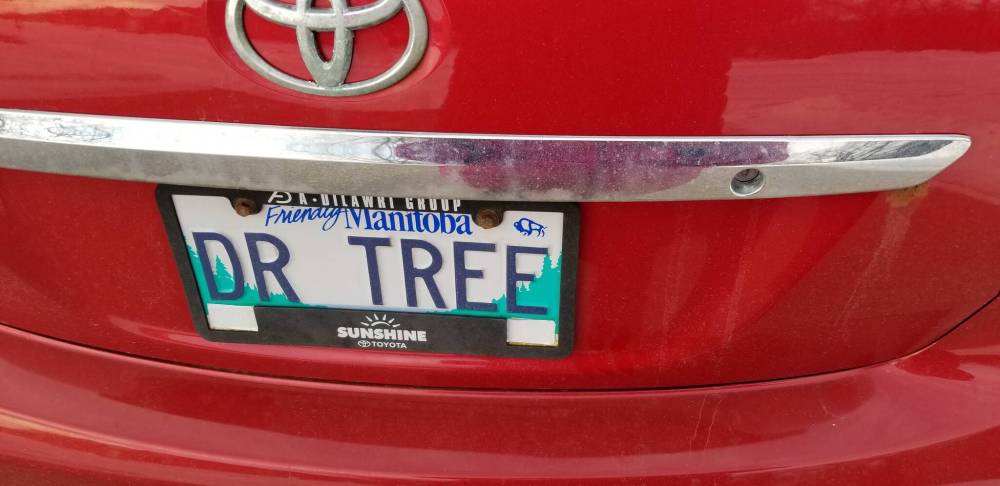
Supplied
Dr. Tree licence plate
One of Allen’s notable achievements, according to those who knew him, was his refusal to allow the Legends of the Fall production to remove trees in the Exchange District, which was being eyed as a stand-in for early 20th-century Montana.
“Mike said absolutely not. The producers said, ‘We’ll get you some whips after we’re done and you can plant those,’ and he said no,” Susan Allen said.
After a great public outcry, city council held a 7 1/2-hour emergency meeting before rejecting the movie makers by an 8-7 vote, the Free Press previously reported. The production used Vancouver’s Gastown neighbourhood instead.
Allen was selected to spearhead a mass planting of maple trees in South Korea to honour Canadian Forces members who fought in the Korean War from 1950 to 1953. The seedlings were planted by South Korean veterans.
Allen started a consulting firm, Viburnum Tree Experts, after serving as the city’s urban forester. He pulled up to house calls in a vehicle that had a “Dr. Tree” custom licence plate.
Regarded as a natural communicator and a media expert, he wrote weekly columns for the Free Press and was a regular guest on radio shows.

Most of all, Allen wanted to equip people, whether they were beginners or experts, with knowledge and an appreciation for trees.
He held workshops on how to prune trees and landscape yards, and led walking tours to educate people about the city’s trees.
Allen wrote a book, Dr. Tree’s Guide to the Common Diseases of Urban Prairie Trees, that was published in 2014 as a visual guide to help people diagnose problems with their trees.
His honours included an International Society of Arboriculture lifetime achievement award, his wife said. Allen judged cities across North America and Europe as a part of the Communities in Bloom program.

An avid reader, he travelled the world with his family in his leisure time, practised reiki — a Japanese energy healing technique — and volunteered at a hospital.
The Allens moved to B.C. in 2021 to be able to spend more time with their son’s family. Their grandson appears to have inherited his grandfather’s love of trees.
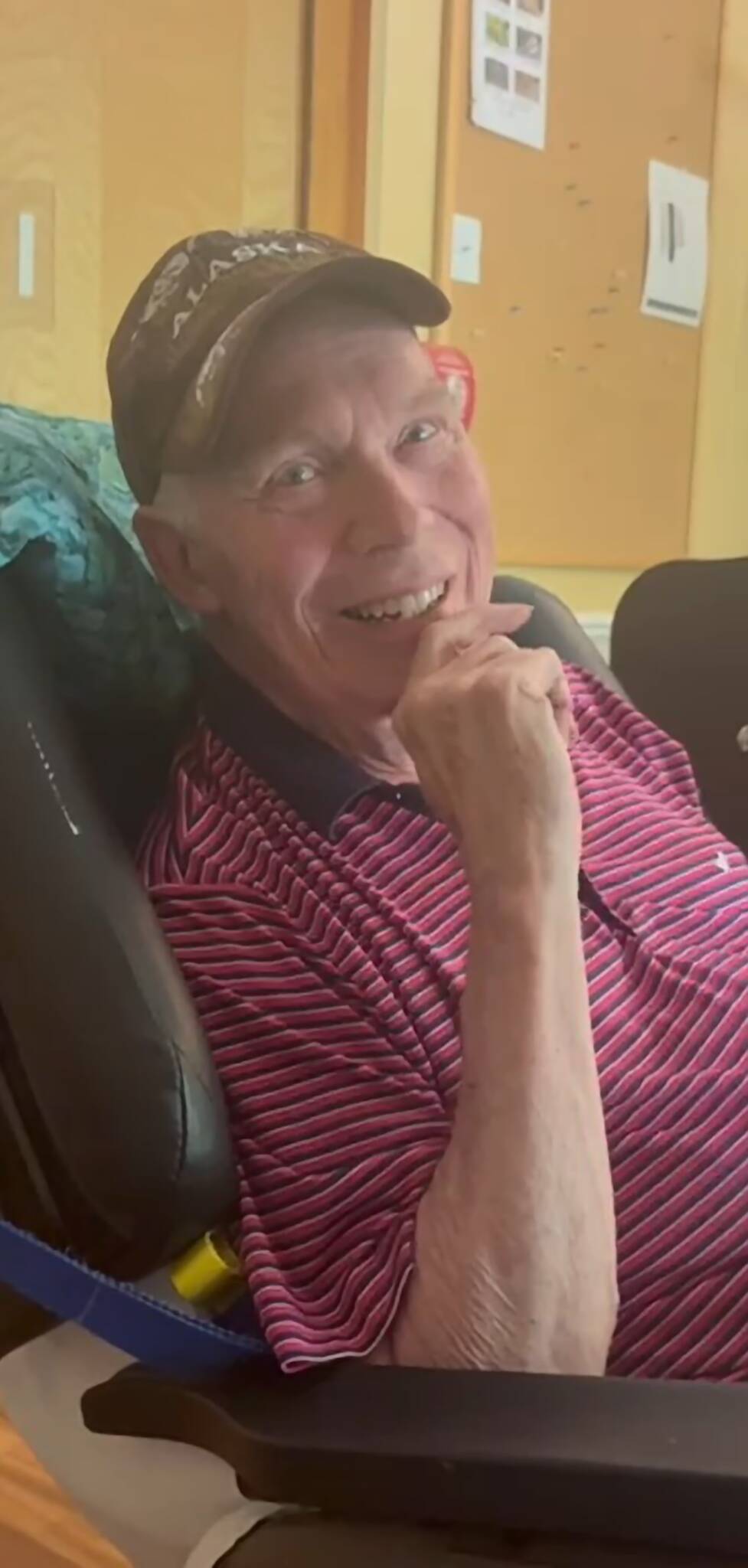
Supplied
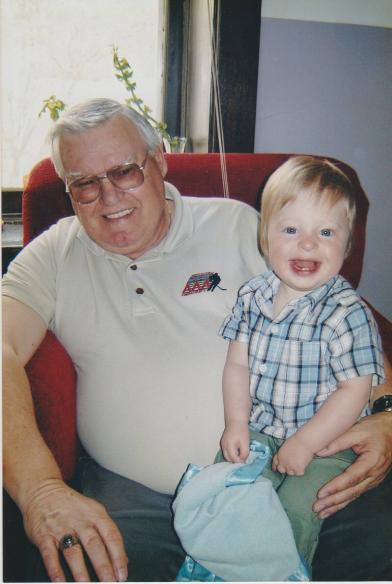
The last picture of Mike Allen
The youngster, who loves to give trees a hug, recently went on a forest walk, where he picked a favourite tree and gave it a name, Susan Allen said.
Allen’s family is planning a fitting tribute to him. Some of his ashes will be placed beneath an oak tree to fulfil one of his final wishes.
chris.kitching@freepress.mb.ca


A Life's Story
February 21, 2026
‘There was nobody else like Kevin’
Career electrician loved cars, music and food
View MoreA Life's Story
February 14, 2026
Living, loving and laughing
Community leader took care of others as a nurse and devoted friend
View More
