

A Life's Story
May 02, 2026
Shaped by history
Ken Osborne was a big believer in learning from the past
By: Graham McDonald
Educator and historian Ken Osborne believed that understanding the past was essential to shaping a better future. He also believed in equal opportunity for all, an ideal that helped lead him to Winnipeg.
John Long, a University of Manitoba colleague who first met Osborne in 1976, described him as a gifted teacher and a serious public thinker.
“He was a thinker. He was an intellectual. No doubt about it,” Long said. “I never met a student who didn’t express joy in having been in his classes.”
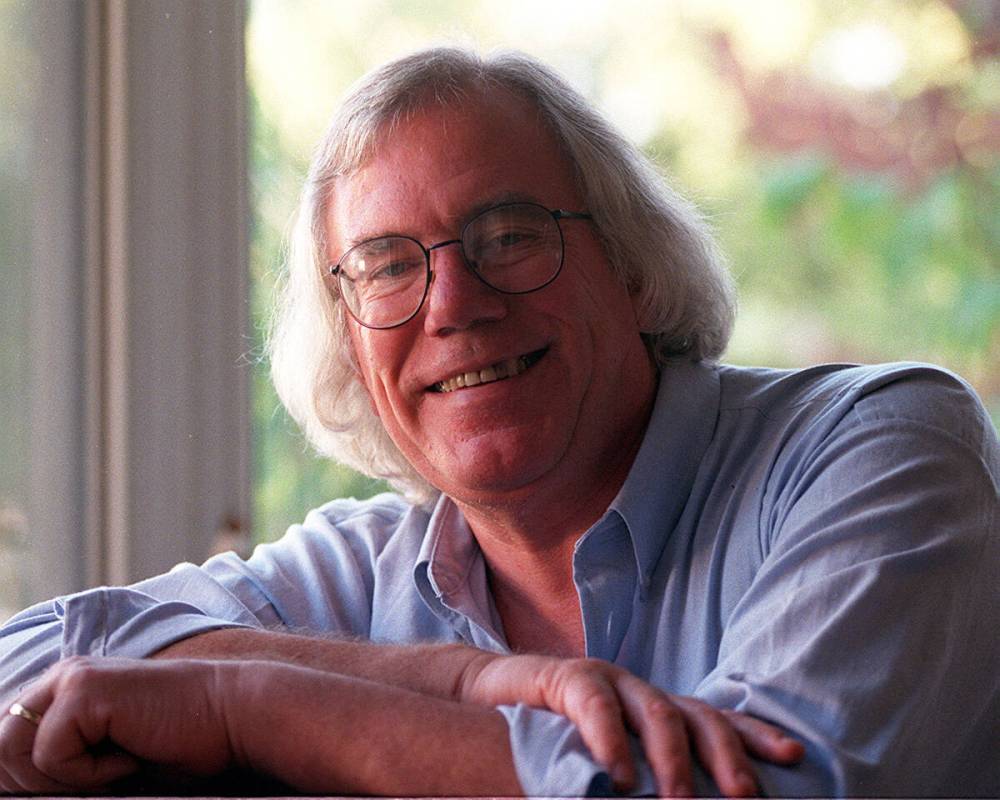
Ken Osborne, who was born in England to a working-class family, emigrated to Canada because it was more egalitarian than his home country.
Osborne died on Nov. 6, 2025, leaving behind a legacy of prolific writing, engaged teaching and a lifelong belief that history could build better citizens.
Long said Osborne stood out not only in the classroom, but as a writer who brought his ideas to a broader audience through newspapers, public talks and books aimed at both educators and young readers.
For Osborne, history was never just about memorizing dates or celebrating nation-building.
Long said Osborne viewed history as “the gateway to citizenship” and believed that “properly taught, history would emancipate us from the coercive pressures of the past.”
Osborne argued that students needed to understand where they came from, both individually and collectively, in order to participate meaningfully in democratic life.
Those convictions were shaped in part by Osborne’s own upbringing.
He was born to a working-class family in Coventry, England, on Nov. 23, 1936. His father was a factory worker. At the time, England had a tiered education system that funnelled students into either “academic” or “vocational” streams at a young age, often determining the course of their lives.
According to his wife, Janet, Osborne’s mother placed a high value on education and it was partly due to her influence that he excelled in school. He was selected for the academic stream and later received a state scholarship to study history at Magdalen College, Oxford. He went on to earn a teaching certification from the University of Birmingham.
“He came to Canada because he did not like the class structure in England,” said his son, Andrew.
“And he did not like the educational system in England and he was an aberration because he actually benefitted from that system.”
Seeking a less class-bound society, Osborne decided in 1961 to relocate with his wife to another Commonwealth country. Canada ultimately won out, in part because it did not replicate the rigid educational streaming system found in England.

Supplied
Ken and Janet Osborne at their wedding in 1959.
Although he had job offers in Montreal and Toronto, Winnipeg was chosen for an unusual reason: the climate.
Janet suffered from asthma, as well as recurring pneumonia and bronchitis. Industrial pollution was a serious issue in England at the time and Winnipeg’s dry, clean air was seen as ideal.
“Our doctor was also a personal friend,” Janet said. “So we talked to him, and he said, ‘The dry climate would be better for Janet.’ And (Ken) said, ‘OK, Winnipeg’s got the driest climate, we’ll go there.’”
Osborne began his Canadian teaching career at Daniel McIntyre Collegiate in 1961. He didn’t find out exactly what the position was until after he arrived.
“When he got here in ’61, he didn’t know what he was going to be asked to teach,” Andrew said. “And the principal told him, ‘Welcome to Winnipeg. You’re going to teach Canadian history.’ He sort of flat-footed and said, ‘What? I don’t know anything about Canadian history.’ And the principal said, ‘You’ll learn with the students.’”
Osborne did just that, quickly mastering the material and developing a reputation as a dynamic and engaging teacher.
After teaching courses at the University of Manitoba, Osborne was eventually hired there as a full-time professor, a position he held from 1972 to 1996.
He believed deeply in the value of history education, seeing it as central to creating informed, politically engaged citizens.
Osborne was also known for his boundless curiosity and formidable personal library.
“It was very hard for him when we moved (to the Canoe Club Retirement Residence), because he had to get rid of, as I estimated, around 5,000 books,” Janet said.

Supplied
Osborne, circa 1965, was a drummer in a band with fellow academics. He was also passionate about jazz.
Osborne’s interests ranged widely, from 19th-century British literature to biography to world history. He read constantly and kept up with current events through multiple newspaper subscriptions, including the Free Press, the Winnipeg Sun and the Globe and Mail.
He wrote daily and, despite a packed schedule, stayed active through gardening, snow-shovelling and long walks.
He was also a jazz enthusiast and a drummer in a band with fellow academics.
Underlying all of this was a core belief in the importance of a well-educated citizenry and in the role education could play in fostering a more just and peaceful society.
Central to Osborne’s career was his interest in how history is taught. He wrote extensively on the subject, including books and articles aimed at both educators and students.
In the final years of his life, he was working on an ambitious manuscript examining how Canadian history has been taught in schools over the past century. As yet unpublished, the manuscript spans roughly 700 pages.
Janet and Andrew said that if Osborne were teaching today, he would likely be disappointed by the current state of history education, a reflection of the high bar he set for himself and his profession.
“He always kind of joked about that,” Andrew said. “If he was always mildly disappointed, then he couldn’t be let down.”
Cheryl Dann, a retired high school teacher who had Osborne as a professor, said he was the only instructor she vividly remembers.
“You knew when you went to his class that you couldn’t be passive, you had to engage,” Dann said.

Supplied
By the 1970s, Ken Osborne was a history professor at the University of Manitoba.
She described him as an enthusiastic and compelling teacher who held his students to a high standard.
“He was very passionate about his subject and about the importance of public education,” she said. “Everyone was paying attention.”

Dann said Osborne’s values shaped his teaching and his relationships with students.
“He really had a very high opinion of public education,” she said. “He was very egalitarian.”
She said Osborne treated students as equals and encouraged them to see themselves as part of a broader system.
“He just made you want to get out there and do a good job,” she said.
fpcity@freepress.mb.ca


A Life's Story
July 26, 2025
Orchestral expressions
Music administrator led with elegance, industry, effectiveness
View More